Does My Church Need a Website? Here's the Honest Answer
If you’ve asked yourself whether your church actually needs a website, you’re not alone. Plenty of pastors running healthy, growing congregations have gotten by for years without one. You have word of mouth. You have Facebook. You have people who bring people. So why does a website matter?
The honest answer is that it matters more than it used to — and for reasons that go beyond just looking professional online.
People Search for Churches Before They Ever Show Up
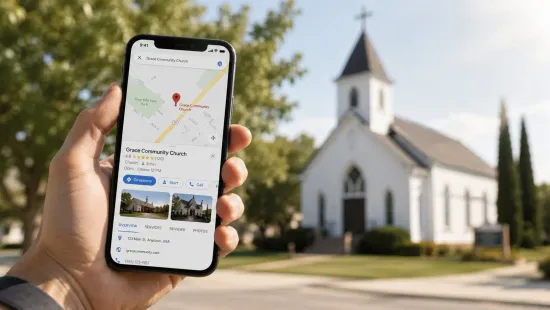
This is the part most pastors don’t fully account for. Before a new family walks through your doors, there’s a very good chance they searched online first. They might have typed “church near me,” “Baptist church in [city],” or even just your church’s name directly.
If you don’t have a website, here’s what they find: nothing. Or worse, outdated information from a third-party listing that gets the service times wrong.
According to research on how people find local businesses and organizations, the majority of consumers — including people looking for a church home — check online before visiting in person. For younger families especially, no website is often a dealbreaker. It signals that the church may not be active or welcoming to newcomers.
That first impression happens before you ever get a chance to shake someone’s hand.
Your Facebook Page Is Not a Website
This comes up a lot. “We have Facebook, isn’t that enough?”
It’s not, and here’s why.
Facebook is rented space. You don’t own it, you don’t control what appears alongside your content, and the algorithm decides who actually sees what you post. Someone visiting your Facebook page might see your last event from three months ago, or they might not find your address and service times easily because Facebook buries that information in the “About” section.
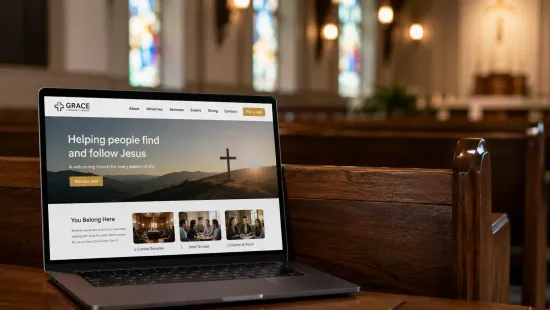
A website gives you a home base that you own and control. Your service times are front and center. Your address links directly to Google Maps. New visitors can find out what to expect before they arrive. Nobody is competing for attention on your page.
Facebook is a great tool for reaching people who are already connected to your church. Your website is for everyone else — especially people who are new to your city or actively looking for a church home.
What First-Time Visitors Actually Want to Know
Put yourself in the shoes of someone new to the area who is looking for a church. They have a few basic questions they want answered before they commit to showing up:
- What time are services?
- Where exactly is the building?
- What is the worship style like?
- Is there anything for my kids?
- Who is the pastor?
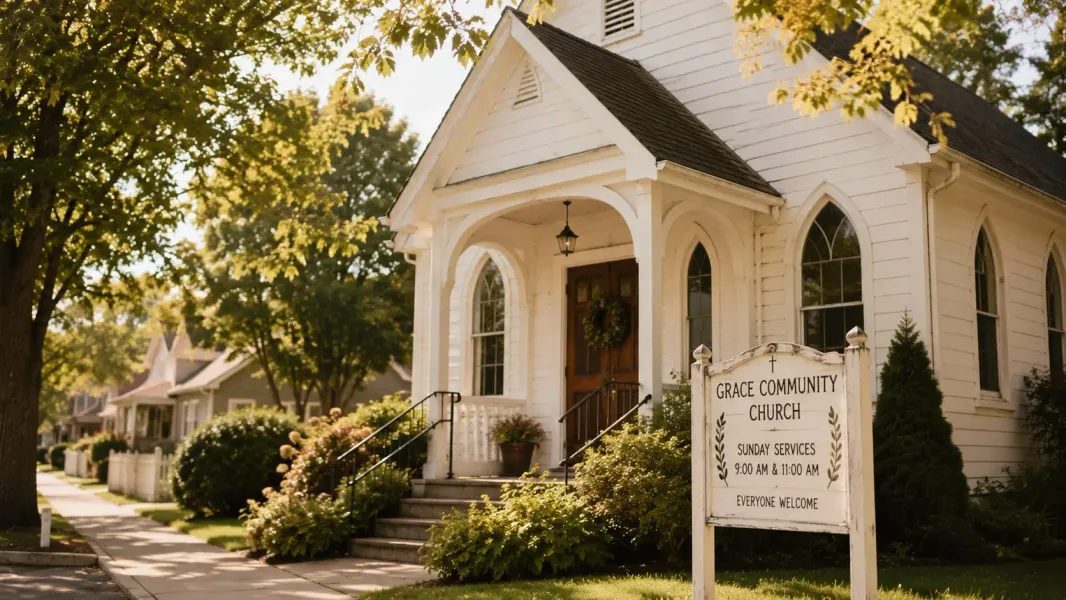
A good church website answers all of these questions clearly and quickly. If someone has to call to find out your service times, most of them won’t. They’ll just look at the next church on the list.
A website removes that barrier entirely. The person gets their questions answered at 10pm on a Tuesday, decides your church sounds like a good fit, and shows up Sunday morning. That is a real conversion that would not have happened without a website.
A Website Works Around the Clock
Your church office has hours. Your phone goes to voicemail. Your pastor has a full schedule.
Your website never sleeps.
Someone moving to your city next month might be researching churches right now at midnight. A young couple church-shopping might look at five churches on a Sunday afternoon while you’re still setting up for the evening service. A person going through a hard time might reach out through your contact form at 2am because they needed to do something that felt like a step forward.
A website handles all of that without any effort from you. It is, in the most practical sense, a ministry tool that works when you can’t.
Younger Families Expect It
This isn’t a criticism — it’s just reality. Families in their 20s and 30s with young children have grown up with the internet. They Google everything. When they move to a new city and start looking for a church, they assume every church worth considering has a website.
If your congregation wants to reach younger families — and most do — a website is table stakes. It doesn’t have to be fancy. It just has to exist and have the right information.
It Builds Credibility Before You’ve Said a Word
There’s a psychological dynamic at play when someone finds a professional-looking church website. It communicates that this congregation takes what it does seriously. It signals organization, care, and that the church is actively welcoming to new people.
A website doesn’t replace genuine community, great preaching, or faithful ministry. But it can be the thing that gets someone in the door in the first place — and that matters.
Addressing the Most Common Objections
“We’re too small for a website.”
There’s no congregation size at which a website stops making sense. If your church has 30 people and you want 60, a website helps. If you have 100 and want 150, same answer. Size is not the threshold. The question is whether you want new people to be able to find you — and the answer to that is almost always yes.
“Nobody in our congregation knows how to build one.”
You don’t have to know how to build one. That’s what services like The 1615 Project exist for. A complete, professionally built website for $97 a month means you never have to think about the technical side.
“We tried once and it never got finished or maintained.”
This is one of the most common stories we hear. Someone in the congregation volunteered to build the site, did a solid job getting it started, and then life got busy and it sat there for two years with outdated information. The solution isn’t to try again with a volunteer — it’s to work with a service that handles ongoing maintenance as part of the deal.
What a Church Website Actually Needs to Do
A church website doesn’t need to be complicated. It doesn’t need a dozen pages, an online store, or a sermon podcast (though that can be added later). At minimum, a good church website needs to do four things:
- Tell people who you are and what you believe
- Make it easy to find your location and service times
- Give new visitors a sense of what to expect
- Provide a way to get in touch
That’s it. Simple, functional, and well-maintained is far better than complex and outdated.
The Bottom Line
Does your church need a website? Yes — but not because websites are impressive or because technology demands it. You need one because real people in your city are searching for a church right now, and if they can’t find you online, they’ll find someone else.
Your church has a story worth telling. A website makes sure people can find it.
If you’re ready to get your church online without the tech headaches or the high cost, take a look at what The 1615 Project offers. One flat monthly rate covers everything — design, hosting, updates, and maintenance — so you can stay focused on ministry.